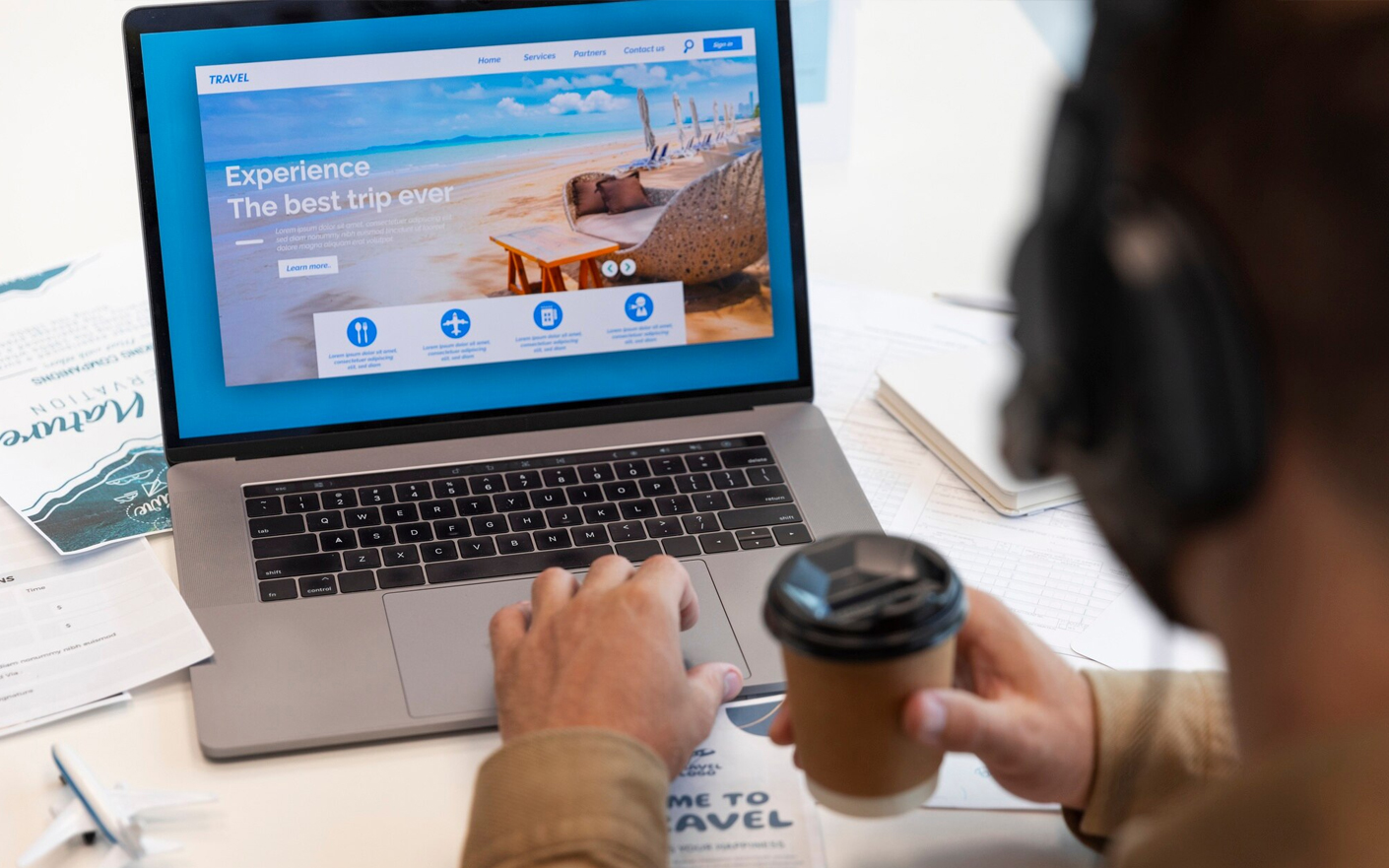
If you’ve ever visited a medical website and felt unsure about what to do next, you’re not alone. Patients make decisions fast, often in just a few seconds, and they rarely scroll to find answers. That’s exactly why many clinics are switching to zero-scroll homepages, a design style built to show every important element above the fold. At Solution21, we’ve seen this shift grow quickly as practices look for a cleaner, faster, and more direct way to guide patients to book appointments. And as a healthcare website design company, we’ve learned one thing for sure: when patients don’t need to scroll, they convert faster.
This design trend isn’t just about looks. It’s driven by patient behavior, search engine changes, and the need for clinics to stand out in crowded local markets. Below, we break down why zero-scroll homepages are becoming the new standard, and how this layout can help your practice bring in more bookings.
Why Medical Patients Decide in Seconds
People looking for doctors or dentists aren’t browsing for fun. They’re usually stressed, in a hurry, or trying to solve a health concern. That means they skim, not search. Data shows that most users decide whether to stay on a medical website in less than five seconds. That tiny window is all a practice has to build trust and guide patients to take action.
Here’s the bigger problem: around 70% of visitors never scroll on medical homepages. If your key information is buried down the page, most patients won’t see it. This is one of the biggest reasons clinics are turning to zero-scroll layouts. As a healthcare website design company, we’ve redesigned many sites where the issue wasn’t lack of traffic, it was that patients simply didn’t see the CTAs placed too far below.
Why Long Homepages Don’t Work Anymore
Years ago, long homepages were trendy. They told a story as the user scrolled. But today, that slows people down. Patients want clarity, not a long journey. When a visitor lands on your site, they mainly want answers to four questions:
- Do you offer the service I need?
- Do you take my insurance?
- Can I trust your provider?
- How do I book right now?
If these answers are not visible right away, patients often leave and choose another provider who shows this information instantly. Modern websites need to support fast decision-making, which is why a healthcare website design company now focuses on compact layouts that reduce friction.
The Data Behind Zero-Scroll Design
This shift isn’t based on design preferences, it’s backed by user analytics and Google’s newer UX benchmarks. Scroll-depth tools show that the majority of medical website visitors only view the top section before they bounce. At the same time, Google’s Core Web Vitals update rewards sites that load quickly, provide immediate value, and reduce unnecessary interaction steps.
A zero-scroll homepage aligns with both patient behavior and search algorithm expectations. When clinics adopt this model, they tend to see a boost in engagement, and in many cases, a measurable rise in booked appointments. As a healthcare website design company, we’ve seen booking increases between 18–32% after switching clients from long homepages to above-the-fold conversion layouts.
What Needs to Be Above the Fold in 2026
A zero-scroll homepage isn’t empty. It's carefully structured to show the most important elements the moment the page loads. For medical practices, the must-have pieces include:
1. Real-Time Scheduling Button
Patients want convenience. A prominent, one-click scheduling button reduces effort and increases conversions.
2. Insurance Accepted
Insurance is often the deciding factor. Showing it upfront removes uncertainty and stops patients from leaving the site to check eligibility elsewhere.
3. Provider Authority
A clear photo of the doctor, credentials, and a short trust-building line gives patients confidence right away.
4. Telemedicine or After-Hours Options
Many users search for flexible care. Highlighting telehealth or extended hours instantly increases interest.
When these elements sit at the top of the page, visitors don’t need to scroll or guess. They get everything they need to act fast.
How We Use Heatmaps to Guide Design
At Solution21, we rely on tools like heatmaps to understand exactly where patients click, pause, or drop off. These insights help us remove distractions and strengthen the path to booking. Heatmaps often reveal that visitors cluster around one small area of the homepage. This tells us that a simple layout works best.
A healthcare website design company must design based on real user behavior, not assumptions. That’s why every zero-scroll homepage we build is tested, refined, and shaped by accurate interaction data.
Why DIY Platforms Fall Short
Builders like Wix, Squarespace, or simple templates may work for general businesses, but medical practices have different needs. Zero-scroll design requires:
- Custom UI spacing
- Fast-loading image compression
- ADA-compliant text
- Integrated scheduling systems
- SEO and schema for medical providers
- Secure form handling
Most DIY platforms can't deliver these features together. A medical practice needs a site that supports compliance, speed, trust, and patient conversions. That’s what a specialized healthcare website design company is built to do.
Final Thoughts
Zero-scroll homepages aren’t a trend that will pass, they’re becoming the new standard for medical practices that want more appointments and a smoother patient journey. By placing the most important information upfront, clinics remove barriers and help patients feel confident faster. At Solution21, we believe in design that works, not design that makes users work. This shift is simple, data-backed, and proven to push practices toward higher growth.
If your website still relies on long scrolling sections and buried CTAs, now is the time to rethink your layout. A cleaner, faster, zero-scroll approach could be the upgrade that transforms your digital presence, and your patient conversions.